


What are the Best Diagnostic Tools for DIY Mechanics? As DIY car repairs continue to trend, more vehicle owners are turning to smart tools to handle basic maintenance and troubleshooting at home. Fueled by YouTube tutorials and rising repair costs, the search for the best diagnostic tools for DIY mechanics is surging.
In this guide, we break down the most essential OBD2 scanners, Bluetooth code readers, battery testers, and ECU programmers every modern home garage should have. Whether you’re just starting or upgrading your setup, these tools will help you read codes, reset sensors, and make smart repair decisions with confidence.
According to Google Trends, search volume for “OBD2 scanner for home use” and “DIY car diagnostics” has risen by over 80% in the past 3 years.
Source:
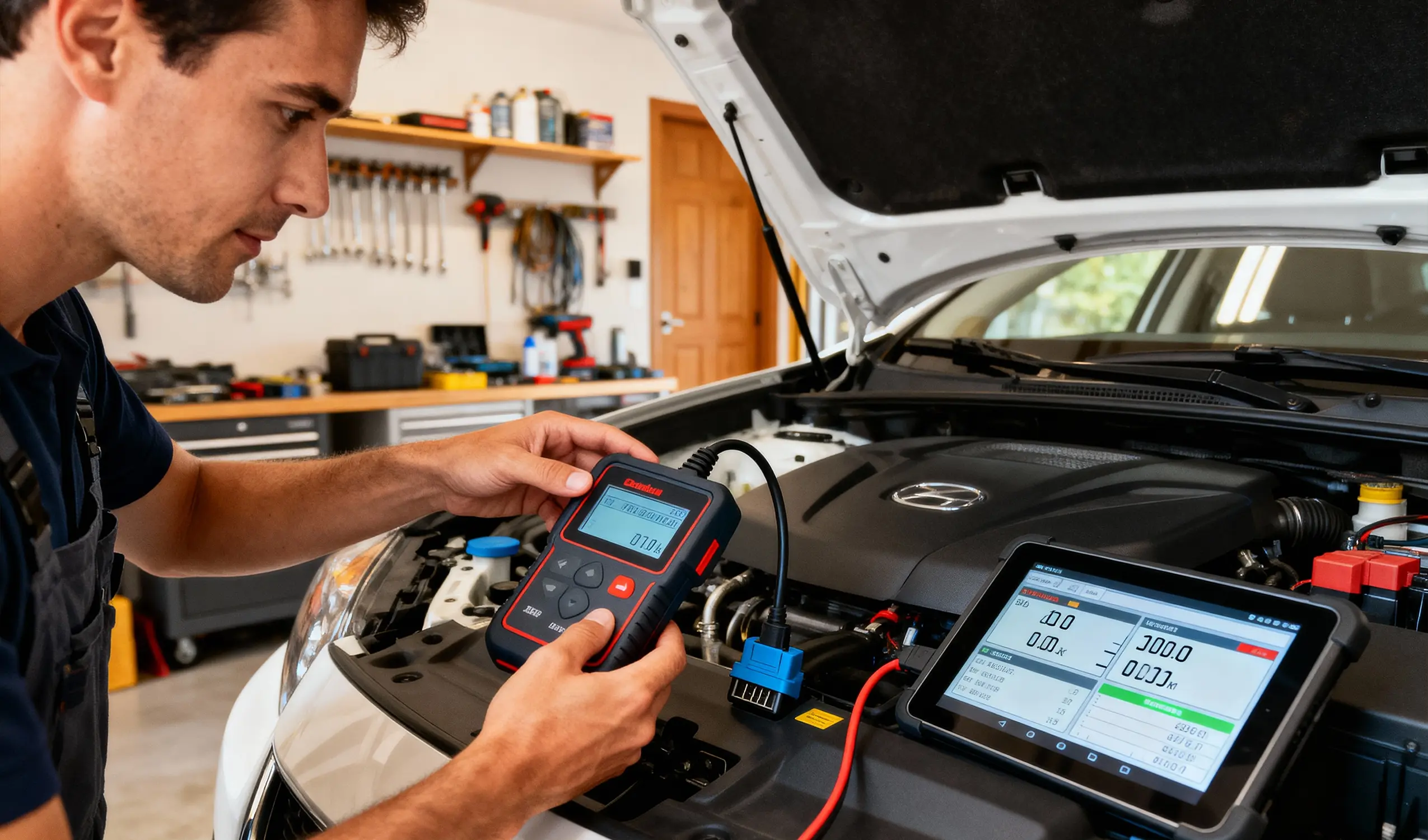
Wired OBD2 scanners plug directly into your vehicle’s port and display fault codes instantly.
These tools offer plug-and-play functionality and are ideal for drivers who need to quickly identify what’s triggering the Check Engine Light (CEL). Brands like Innova are widely praised for user-friendly interfaces and code libraries with descriptions.
Connects wirelessly to your smartphone via apps like Torque, OBDeleven, or FIXD.
Bluetooth scanners are rapidly growing in popularity due to their affordability and versatility. According to a review from TechRadar, FIXD offers one of the best smartphone-compatible scanners for beginners.
Allow custom tuning, performance upgrades, and reading manufacturer-level data.
These tools are ideal for users who want to get the most out of their vehicle. With ECU programmers, you can adjust torque maps, remove speed limiters, or perform deep-dive diagnostics not available on standard scanners.
Test battery voltage, alternator output, and electrical circuits.
A dead battery is one of the most common car issues. With battery testers like the FOXWELL BT100, you can determine if your battery is the problem or if it’s your alternator or starter. Battery University supports routine voltage testing as key to battery longevity.
Source:
All-in-one tools with touchscreen interfaces, full system scans, ABS/SRS diagnostics.
These tools are more expensive but provide deep diagnostics for ABS, airbags, transmission systems, and more. Autel is a leader in this category, offering wide vehicle coverage and free updates for one year (Autel Official).
A 2024 CarMD survey found that 74% of users said an OBD2 scanner helped them avoid unnecessary mechanic visits.
According to AutoZone’s 2023 DIY report, diagnostic tool owners perform 3x more repairs at home versus non-tool owners. They’re also more likely to follow routine maintenance schedules.
If you’re serious about tackling repairs yourself, investing in the best diagnostic tools for DIY mechanics is a no-brainer. From wired OBD2 code readers to Bluetooth scanners and multifunction tablets, today’s tools empower you to diagnose problems like a pro—without paying shop rates.
Explore our top picks at Ruben’s Tires and get the right scanner for your garage today.
Ready to take control of your car repairs?
Shop OBD2 scanners, Bluetooth readers, and diagnostic tablets at Ruben’s Tires — tested tools, expert picks, and unbeatable prices.
Diagnose smarter. Fix faster. Spend less.
The best OBD2 scanner for beginners is the Innova 3100RS. It offers live data, easy-to-read menus, and clear code explanations for quick diagnostics.
Yes, any vehicle made after 1996 is OBD2 compliant. This means you can use a universal OBD2 scanner on most modern cars and trucks.
Bluetooth OBD2 scanners are reliable for everyday use. Models like FIXD and BlueDriver provide real-time diagnostics and app-based controls.
Look for scanners with live data, built-in code definitions, TPMS and oil reset functions, and updateable software for long-term use.
A pro-level tablet scanner is worth it if you maintain several vehicles. These scanners offer advanced diagnostics like ABS and SRS systems.
If your car was made after 1996, it’s OBD2 compatible. You can confirm by checking for the OBD2 port under the dashboard.
Yes, most OBD2 diagnostic tools allow you to clear trouble codes and reset the check engine light after fixing the issue.
OBD2 apps paired with Bluetooth scanners can match handheld tools in functionality, but they depend on phone compatibility and connection quality.
A code reader only retrieves error codes. A scan tool offers advanced features like live data, active tests, and full system diagnostics.
Yes, you can use a diagnostic tool to check if emission monitors are ready, helping you pass your emissions test more easily. Yes, scanners can verify if your vehicle’s emission systems are “ready” before testing, helping avoid test failures.
Leave A Comment